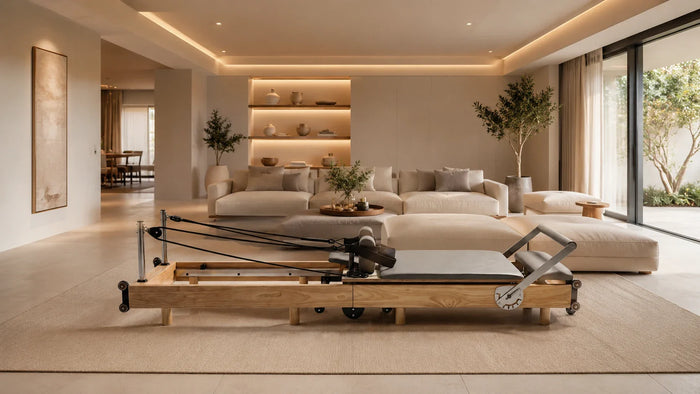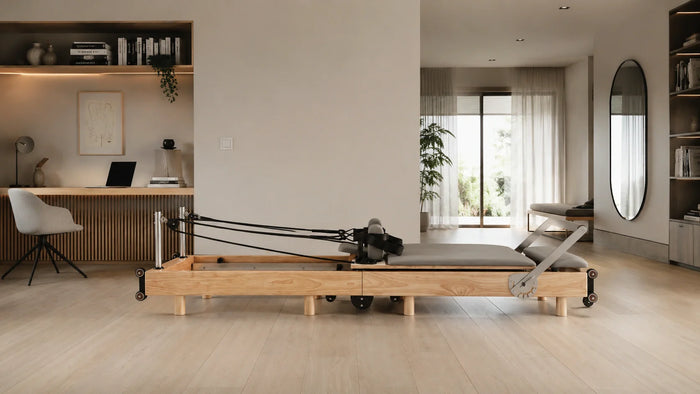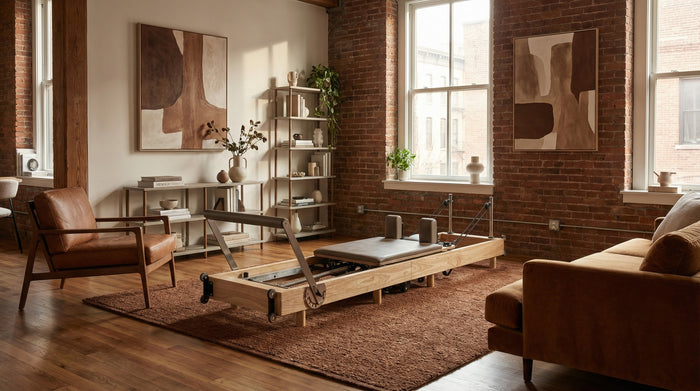
When we set out to design the NX901, we knew it wouldn't spend its life in a commercial studio. It would live in bedrooms, living rooms, garden-facing conservatories, and converted garages. It would share space with bookshelves and coffee tables and children's toys.
So we asked five owners to show us exactly how they made it work — not in a styled photoshoot, but in their actual homes, on an ordinary Tuesday.
1. The Sydney Apartment
Sarah and James live in a two-bedroom apartment in Surry Hills. The reformer sits in the corner of their open-plan living area, beside a tall Monstera and a wall of built-in shelving. When Sarah isn't using it, it folds flat against the wall and practically disappears.
"People come over and don't even notice it until I point it out. It just looks like another piece of furniture."
The key, Sarah says, was choosing a finish that matched their existing timber. The walnut frame blends with their mid-century dining table and flooring. There's no visual clash, no "gym equipment in the living room" feeling.
2. The Yarra Valley Farmhouse
Tom and Elise converted a sunroom at the back of their 1920s weatherboard into a dedicated practice space. The room is small — barely 3 by 4 metres — but with a single reformer, a wall mirror, and natural light from three sides, it's everything they need.
There's no air conditioning, no screen on the wall, no Bluetooth speaker. Just the reformer, the sound of birds, and a view of the garden through old timber-framed windows.
- Room dimensions: 3m × 4m (12 sqm)
- Flooring: original hardwood with a yoga mat beneath the reformer
- Natural light from three sides — no overhead lighting needed during the day
- Wall mirror sourced from a local salvage yard
3. The Melbourne Terrace
In a narrow terrace house in Fitzroy, the reformer lives in the bedroom. Not ideal for everyone, but for Priya it's become part of her morning ritual: wake up, practice for thirty minutes, shower, start the day.
The NX901's silent carriage mechanism was the deciding factor. No rattling, no squeaking, nothing to wake her partner at 5:45 a.m.
4. The Coastal Retreat
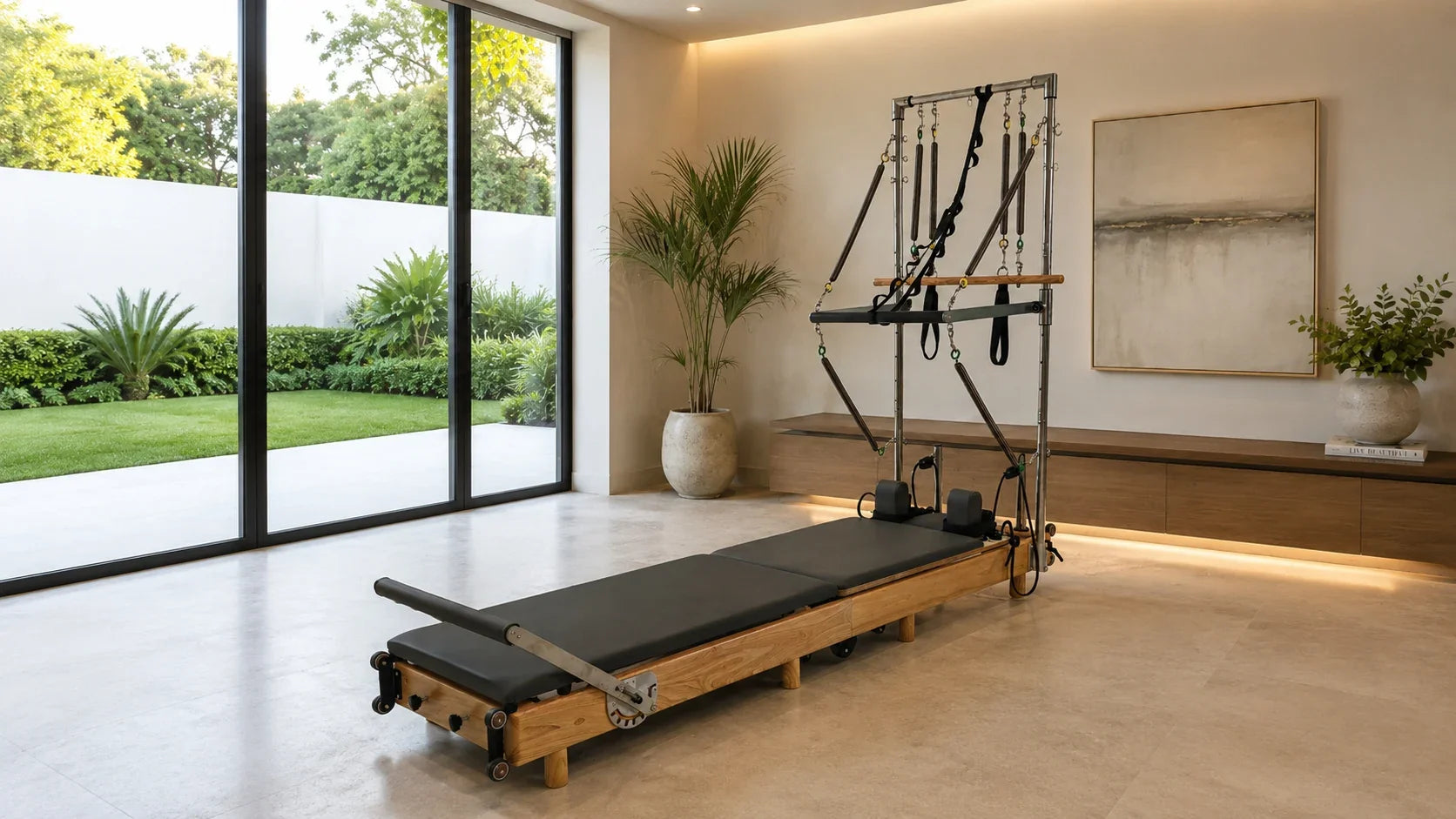
Down on the Mornington Peninsula, a couple placed their Tower model in a glass-walled extension that opens onto the garden. The line between inside and outside blurs. When the bifold doors are open in summer, the ocean breeze comes through mid-session.
They chose the NX901-T specifically for the trapeze tower attachment, which they use for hanging exercises and stretches that complement their surfing practice.
5. The Converted Garage
Not everyone wants the reformer in the house proper, and that's fine too. Mark, a physiotherapist, converted his single-car garage into a treatment-and-practice space. Rubber flooring, a single pendant light, the reformer against one wall, and a treatment table against the other.
"Having it separate from the house creates a mental boundary. When I walk into this space, I'm here to focus. It's my version of going to the studio."
His clients sometimes use the reformer during sessions, which he says has been "the single best investment I've made for my practice."
What We Learned
No two setups were the same, but a few things came up again and again: natural light matters more than room size. Quiet operation matters more than features. And a reformer that looks considered — not clinical — makes all the difference in whether it stays out or gets hidden away.
If you're thinking about bringing a reformer home, don't wait for the perfect room. Start with the space you have. The practice will follow.