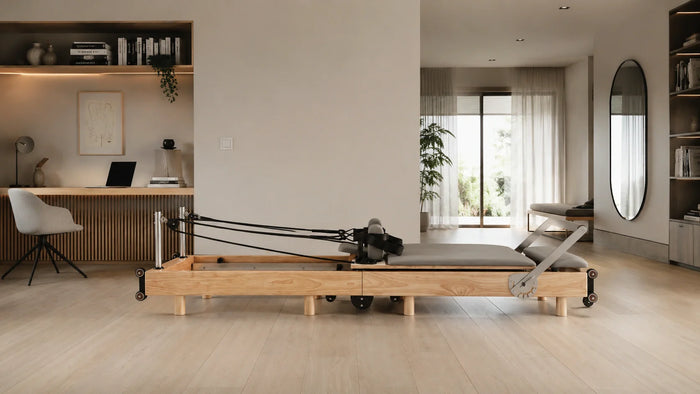
There's a particular quality to the hour before the world wakes up. The light is different. The silence is complete. And the decision to move your body before the day begins — before the emails, the meetings, the demands — sets a tone that carries through everything that follows.
We spoke to a dozen Nexace owners who practice at dawn. Their routines look different, their reasons vary, but they agree on one thing: once you find a morning practice, it's almost impossible to give it up.
The Physiology of Morning Movement
Your body temperature rises through the morning, and with it, muscle pliability. Practising reformer pilates as your body warms — rather than forcing cold muscles into intensity — creates a natural progression that studio classes, bound to a fixed clock, often can't replicate.
Cortisol, which peaks in the first hour after waking, is your body's natural energiser. Morning movement channels that cortisol productively, rather than letting it accumulate as low-grade anxiety before your second coffee.
What the research shows
A 2022 study published in the British Journal of Sports Medicine found that adults who exercised in the morning showed greater improvements in attention, visual learning, and decision-making than those who exercised later in the day. The effect was amplified when the morning session included short walking breaks — but the pattern held for any structured movement.
Making It Stick
The biggest obstacle to a morning practice isn't motivation. It's logistics. Cold air. The distance between the bed and wherever your equipment lives. The mental calculation of whether the alarm is worth it.
Here's what works, drawn from the people we spoke to:
- Lay your clothes out the night before. Remove every micro-decision that stands between waking up and starting.
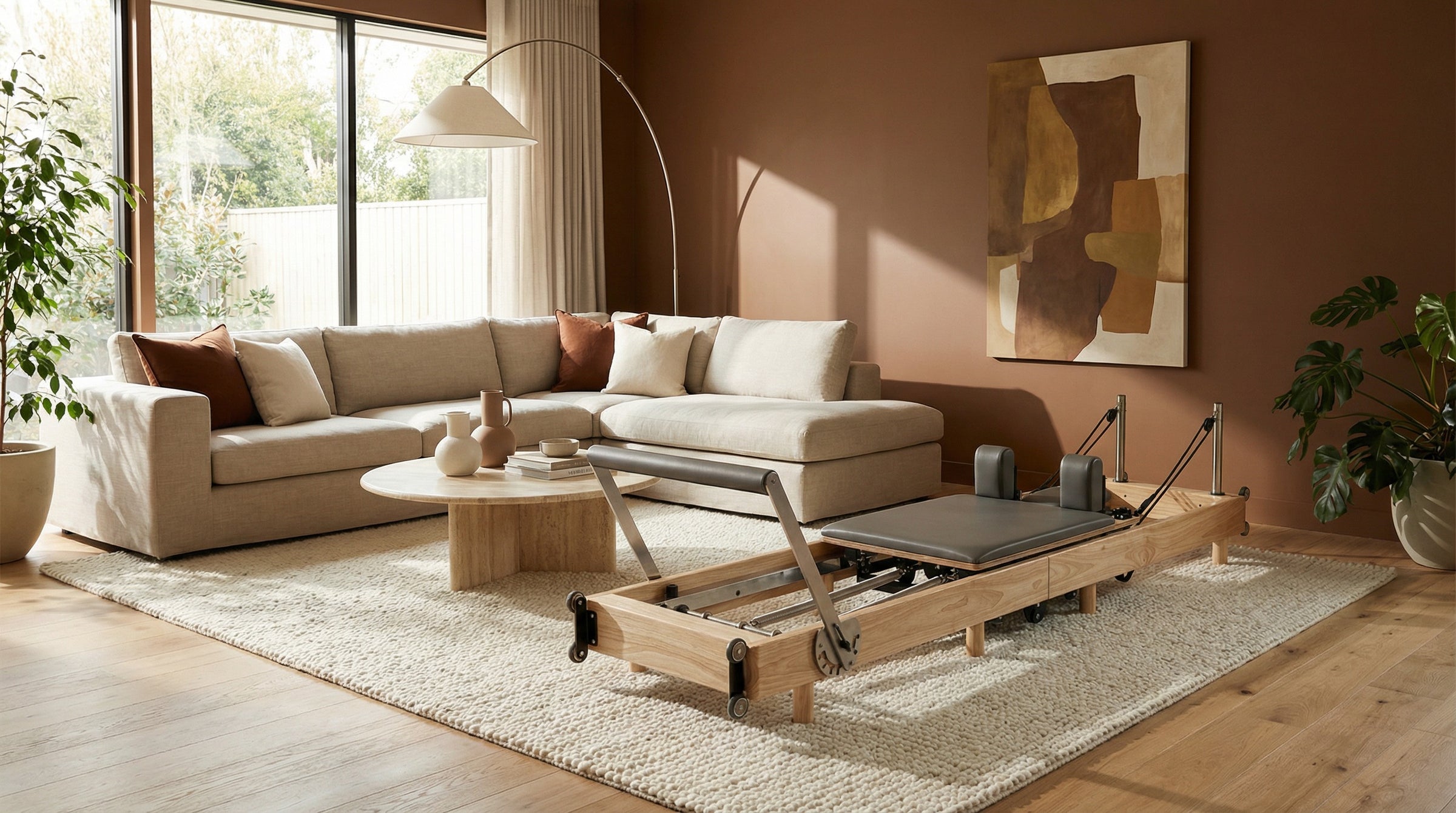
- Keep your reformer somewhere warm. A cold spare room is a barrier. The bedroom or a sunlit corner of the living room is an invitation.
- Start with twenty minutes, not an hour. Three rounds of footwork, a hundred, some spinal articulation. Done. The habit matters more than the duration at first.
- Don't check your phone first. The practice exists in its own time. Give it that.
A Sample 25-Minute Dawn Session
This is the sequence one Melbourne teacher recommends for early-morning practice — designed to be gentle on a body that hasn't fully woken up, but complete enough to leave you genuinely energised.
- Footwork series (5 min) — heels, arches, toes, tendon stretch. Light spring resistance.
- Hundred (3 min) — modified if needed; full if you're warm.
- Short spine and long spine (5 min)
- Stomach massage series (5 min)
- Side-lying leg series (4 min each side)
- Seated roll-down (3 min) — finish on the reformer, then roll to the mat for two minutes of stillness.
"I used to need two cups of coffee before I felt human. Now I'm done with my practice before my partner wakes up, and I feel more awake than I did after a whole pot. I don't understand it, but I'm not going back."
The Quiet Is the Point
One thing every early practitioner mentions, unprompted: the silence. A home reformer at 6 a.m. is a private experience in a way that a studio class never can be. No one to compare yourself to. No instructor cueing you faster than you want to go. Just the sound of springs, the rhythm of your breath, and the day not yet started.
That silence — and what you do inside it — tends to stay with you long after the session ends.