For years, the reformer was a studio-only experience. You booked a class, drove or walked to a dedicated space, and practiced in a room full of other people doing the same. The equipment lived there. The practice lived there. When the session ended, you left it all behind.
Thousands of practitioners have now made the transition to practising at home. We spoke to three of them about what changed — and what, unexpectedly, got better.
Anna, Former Studio Regular — Melbourne
Anna practiced at a Pilates studio in South Yarra three times a week for seven years. She had a favourite instructor, a preferred reformer, a routine that felt almost liturgical. The idea of doing it at home felt like a compromise.
"I thought I'd miss the instructor's corrections," she says. "What I didn't expect was how much I'd notice my own body once I wasn't self-conscious about being watched."
She practices early on weekday mornings now — 45 minutes before her daughter wakes up. The session is quieter, more exploratory. She returns to sequences she loves and lingers in them. She moves past the ones she doesn't.
"The studio gave me the foundation. The home practice gave me the relationship with it. Those are different things, and I needed both."
She still books a class once a month — partly for the social element, partly to get a professional eye on her technique. But it's supplementary now. The home reformer is the practice.
Daniel, Physiotherapist and Practitioner — Brisbane
Daniel's case is specific: he uses his reformer both for personal practice and as part of his physiotherapy work with clients. The home-and-clinical crossover is something he hadn't anticipated when he first bought the NX901.
"I started using it in rehabilitation sessions and the response from clients was immediate," he says. "The quality of the equipment matters in ways you don't fully appreciate until you've worked on something lesser."
What surprised him about his own practice was the consistency that came with proximity. In the studio era, a busy week meant skipped classes. At home, the bar is different.
- He practices five days a week, down from three in the studio era.
- Average session length: 35 minutes. Down from 55 — but more targeted.
- He films himself quarterly and compares technique across six-month spans.
On equipment quality
"The silent mechanism matters more than people think. A reformer that clunks or squeaks pulls you out of the internal focus that makes Pilates work. It sounds precious, but it's not — it's just physics. You can't be in your body and distracted by your equipment simultaneously."
Yuki, Corporate Lawyer — Sydney
Yuki's transition was practical rather than philosophical. Studio classes required booking in advance, commuting, and a fixed commitment of time. Her schedule made that almost impossible most weeks.
"I'd pay for classes and miss half of them," she says. "At home, there's no booking. I do twenty minutes at 9 p.m. if that's what the day allows. Or an hour on Saturday morning if I have the time. The practice fits the week rather than the other way around."
She was sceptical about whether she'd have the discipline to practice without external structure. Eighteen months in, that concern has faded.
"I thought I needed the class format to push me. What I actually needed was to stop treating Pilates as an appointment I could miss and start treating it as something I do."
What the Transition Actually Involves
Based on conversations with dozens of home practitioners, the transition has a pattern. The first month is adjustment — learning your own cues, establishing a time of day, finding where the reformer lives in the space. Months two and three are consolidation. By month four, most people report that the idea of going back to studio-only practice feels unnecessary rather than appealing.
The things that help most, almost universally:
- A dedicated time of day, even a rough one.
- A short reference sequence you can do on autopilot when motivation is low.
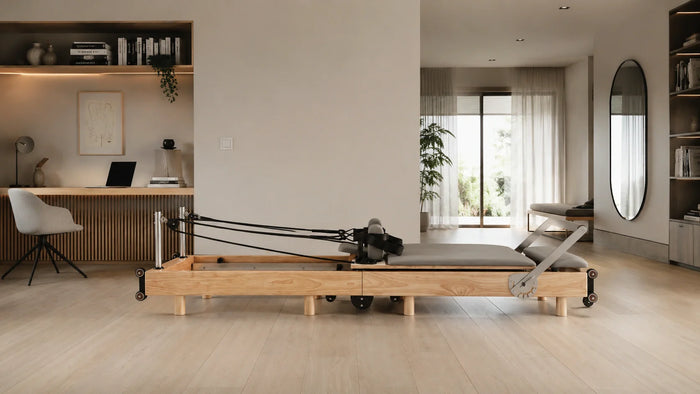
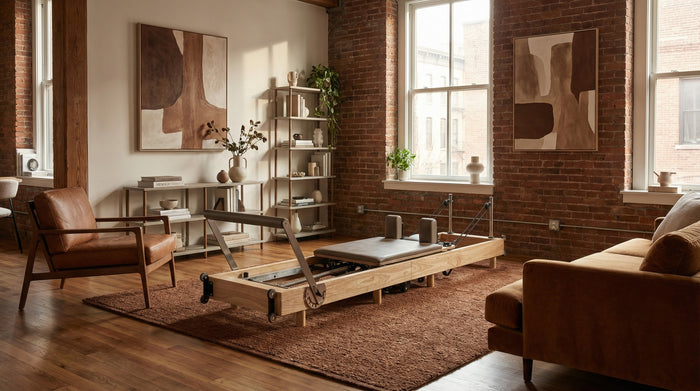
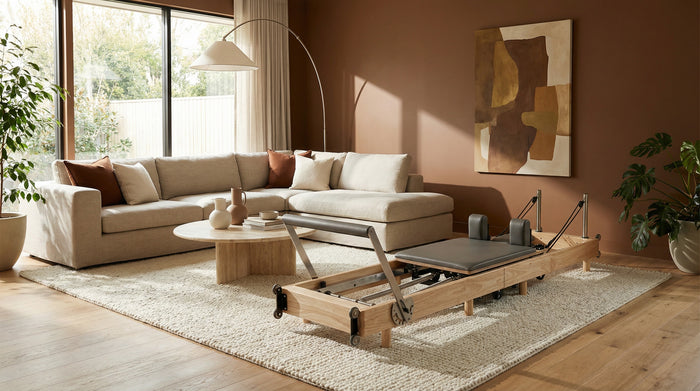
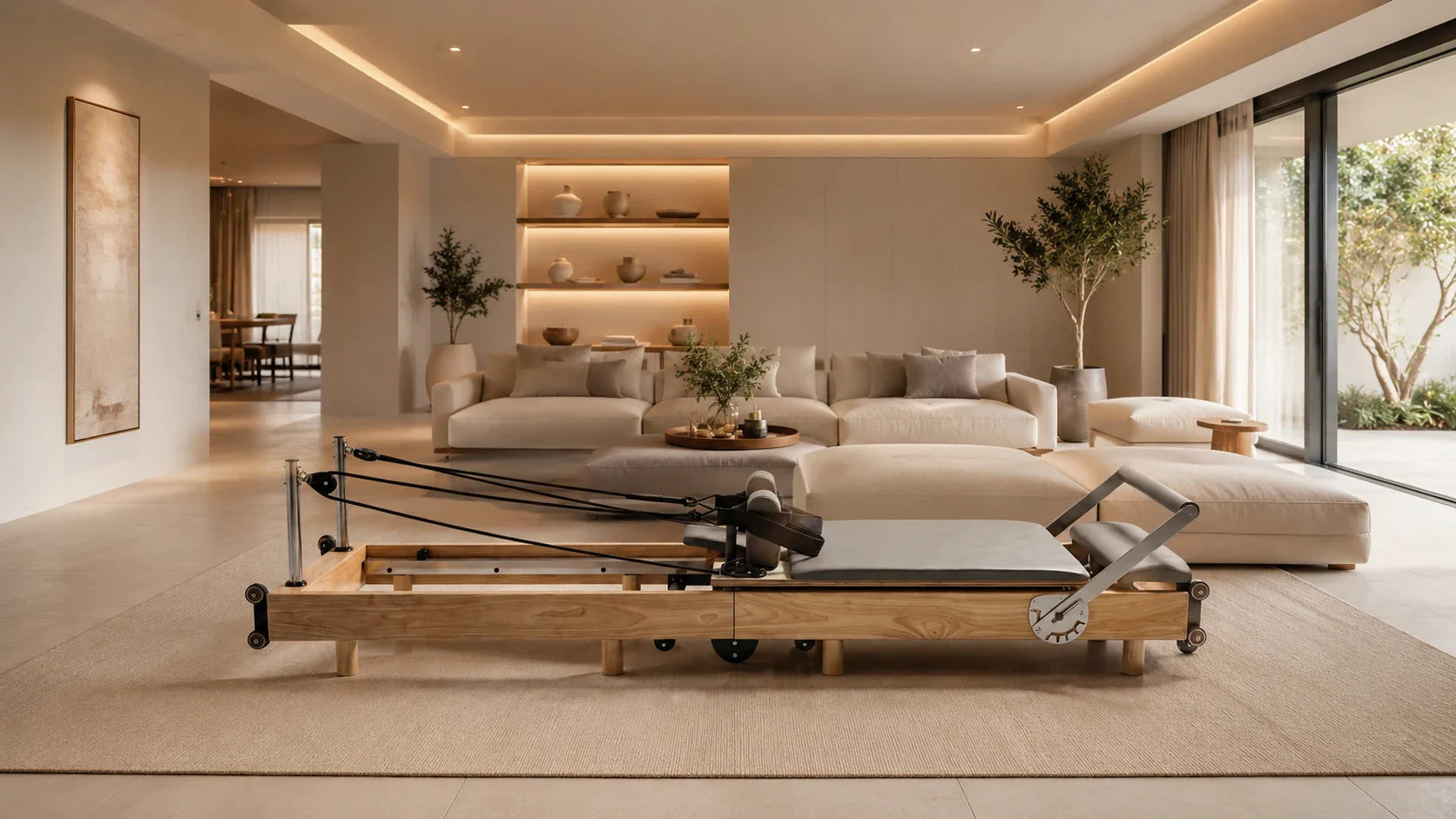
- Keeping the reformer accessible — not folded away, not in a separate room.
- A periodic studio session to refresh technique and maintain connection to the broader practice community.
The things that don't matter as much as anticipated: having a perfect space, having a large space, having a mirror, having a teacher watching.
The practice, it turns out, is more portable than most people think. It was always yours. The home reformer just makes that explicit.